
 

About Us


DRAIG has two missions:


  • To support nations seeking power generation using their own resources to generate reliable and clean electricity


  • To make the world a better place and support the promotion and preservation of engineering – the company plan to use all of its profits to support this endeavour.


DRAIG are committed to delivering for our customers:


Energy Security


Clean Air


Long-term sustainability


RPX2000

RPX range of DRAIG solid fuel burners operate on almost any solid fuel, especially coal, anthracite, or any dry biomass. Unlike many other forms of combustion, they operate with very low emission figures within any of the world-wide clean air regulations, without the need for additional external gas cleaning equipment (though these can be employed to capture various biproducts for resale).


The DRAIG combustion system can be part of a custom designed power station, or can be used to convert an existing ‘dirty’ power station to operate within the clean air regulations, thus extending the life of the power station.


----END SECTION----.

DRAIG TECHNOLOGY

Cleaning Up The Emissions


Converting an existing power station to DRAIG technology is straight forward, as all components of a conventional power station basically remain the same.


When a pulveriser mill is being used for coal, or an alternative biomass burner is being used for biomass,  these can be replaced by DRAIG’s RPX burners as shown in this diagram.


Fuel Choices

All solid fuels can be burnt cleanly in the RPX2000, these fuels include:- Anthracite, bituminous coals, lignite, peat, pelletised coal dust and petroleum coke.


Many sources of Biomass such as:- forestry waste, pelletised sawdust, bamboo, reeds and grasses.

Bio-fuels such as Wood chips, reclaimed wood (Chipped), Chipped bamboo, pelletised sawdust and certain types of WDF.


RPX2000

The RPX range of DRAIG solid fuel burners operate on almost any solid fuel, especially coal, anthracite, or any dry biomass. Unlike many other forms of combustion, they operate with very low emission figures within any of the world-wide clean air regulations, without the need for additional external gas cleaning equipment (though these can be employed to capture various biproducts for resale).


  • The DRAIG combustion system can be part of a custom designed power station, or can be used to convert an existing ‘dirty’ power station to operate within the clean air regulations, thus extending the life of the power station.


Advanced Combustion

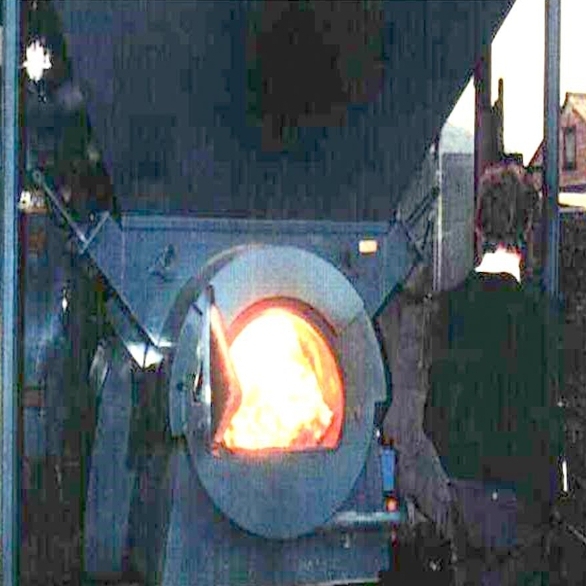
Solid fuel, such as coal is introduced at the top of the RPX burner from a fuel storage hopper and when the fuel enters the RPX burner, it passes through the gasification zone, where, due to the very high temperature burn, the solid fuel releases a large quantity of its volatile gases. These volatile gases are ignited and expelled from the RPX unit through the fire tube into the steam raising boiler, as a clean 3-4m flame.


Automatic Operation

Solid fuel, such as coal is introduced at the top of the RPX burner from a fuel storage hopper and when the fuel enters the RPX burner, it passes through the gasification zone, where, due to the very high temperature burn, the solid fuel releases a large quantity of its volatile gases. These volatile gases are ignited and expelled from the RPX unit through the fire tube into the steam raising boiler, as a clean 3-4m flame.


The RPX2000 is Unique

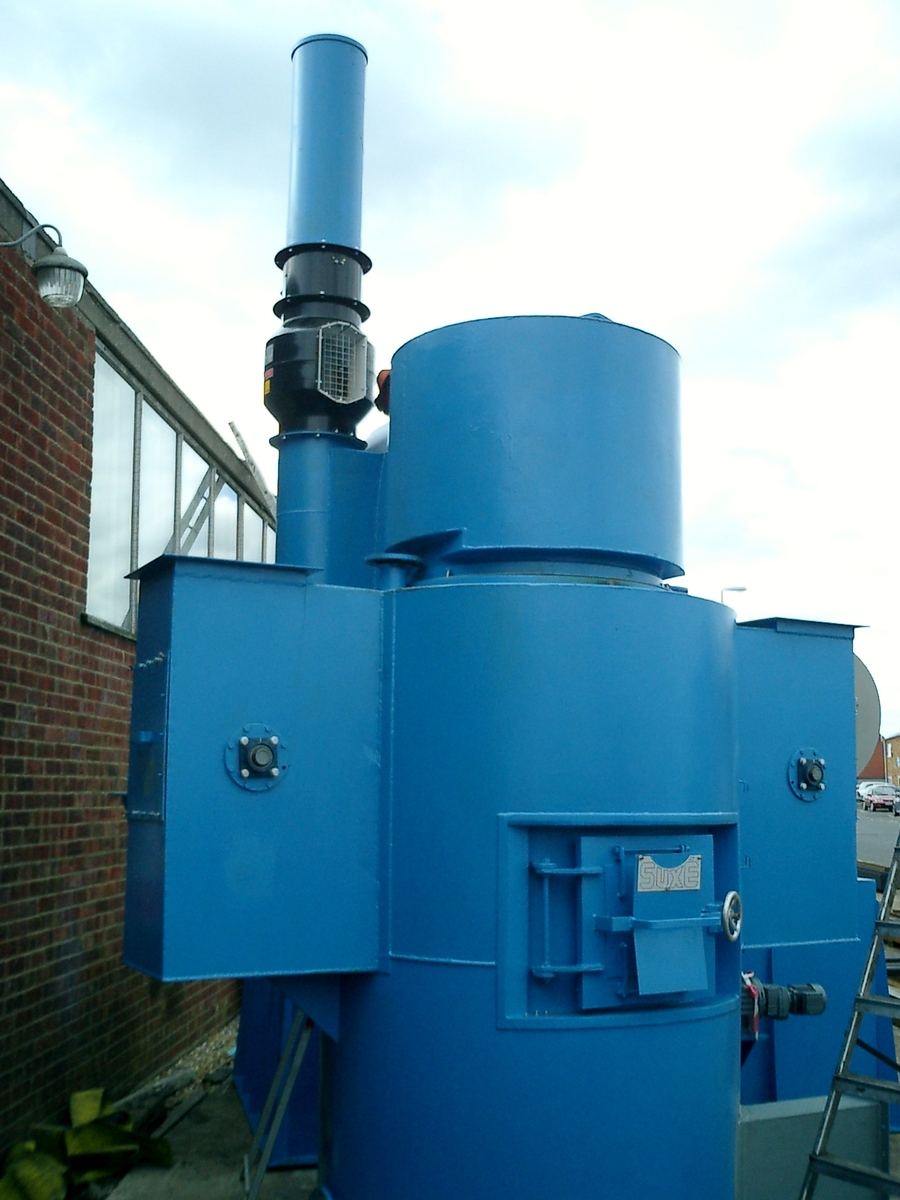
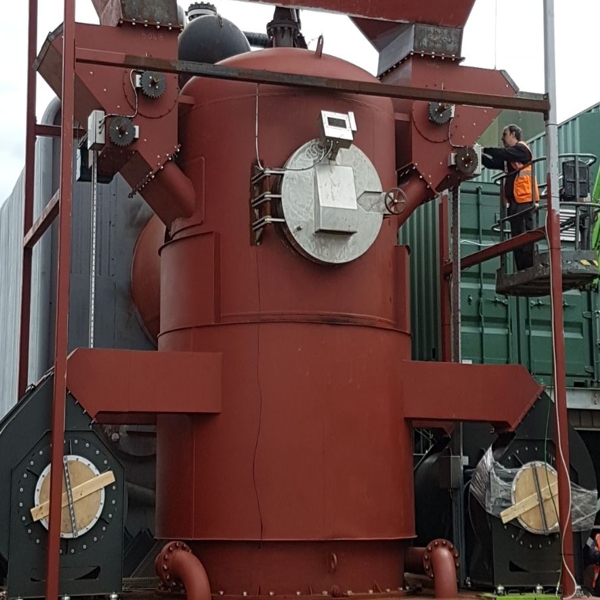
The DRAIG RPX 2000 burner stands vertically and works in a similar way to a coke oven by providing a very high temperature combustion zone, acting as a gasification zone. The burner unit has a water- cooled jacket surrounding the combustion chamber and the water that is pre-heated by the burner is then passed into a steam boiler for further heating to raise steam.

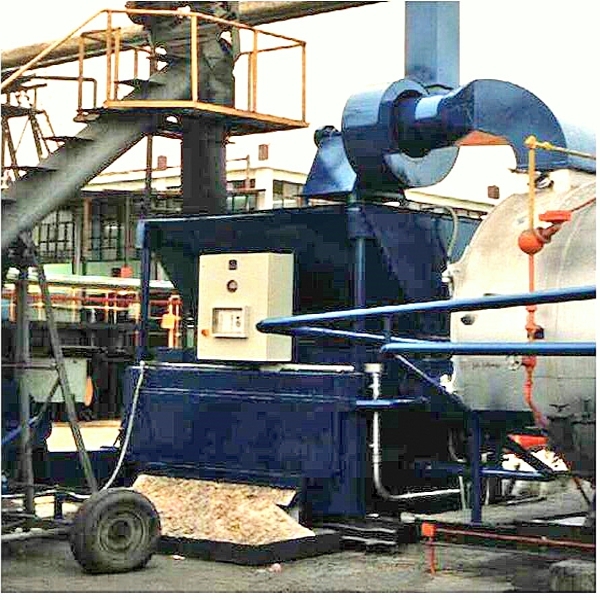
The combustion process is simple. The solid fuel, ideally between 15mm and 30mm, is delivered from a storage hopper which sits above the DRAIG combustor and the pre-heated primary air is delivered horizontally and efficiently to the combustion chamber. The fuel then passes through the gasification zone, all volatile gases are released and the fuel then continues to fall onto the fire bed where all remaining carbon is combusted.

The clean flame from the volatile gases is then blown like a rocket flame, through the fire tube into the boiler. This clean flame, up to 4m long, heats the boiler to steam point.


The key to clean combustion, is the DRAIG control system, which is constantly monitoring the input of primary air and fuel. Unwanted excess air is eliminated, as excess air combines with nitrogen, sulphur and carbon to make the unwanted and environmentally damaging gases


Ultra Low Emissions

The DRAIG control systems balance the quantity of oxygen to achieve 98-99% optimum combustion. With optimum combustion there is little, or no carbon left in the fuel, and with no excess air to combine with any element to form unwanted gases, the result is cleaner emissions. 

Pictured to the right is a DRAIG RPX2000 chimney during a full firing sequence at the 3F Pellets site in Lincoln in the UK. This burner was being run on wood, but you would get the same results no matter the type of fuel. There is no visible smoke. There will sometimes be water vapour in the chimney gases, if the fuel source is wet when introduced to the combustion chamber.

Smoke is only present in  flue gases when the carbon in the fuel is not fully combusted. This is eliminated in the DRAIG RPX units due to the very high combustion temperature, and the constant computer control of the oxygen entering the combustion chamber. 

The greater the quantity of excess air, the greater the reactions between oxygen and the elements contained in the coal, resulting in greater quantities of CO (Carbon Monoxide) and CO₂ (Carbon Dioxide).

The reason the RPX 2000 runs without smoke is due to the very high temperature burn, which can be up to 2000°C precipitating the gasification of the solid fuel. This temperature is determined by the fuel type being combusted.


Computer Control

The DRAIG computer system controls the air flow into the combustion chamber virtually no excess air is delivered, thereby ensuring 98-99% combustion. When optimum combustion is achieved, there is no carbon left to react with the air and the gaseous emissions are so much cleaner. The image to the right shows the emissions readings achieved on wood at the Lincoln site.

An additional benefit of firing the primary air horizontally into the circular combustion chamber is that any particulate matter is naturally cycloned down towards the fire bed. In all other types of solid fuel combustion processes employed in power stations the air is being driven upwards through a fire bed under high pressure, thus lifting any particulate matter into the boiler or up the chimney stack.


----END SECTION----.


COMPANY HISTORY

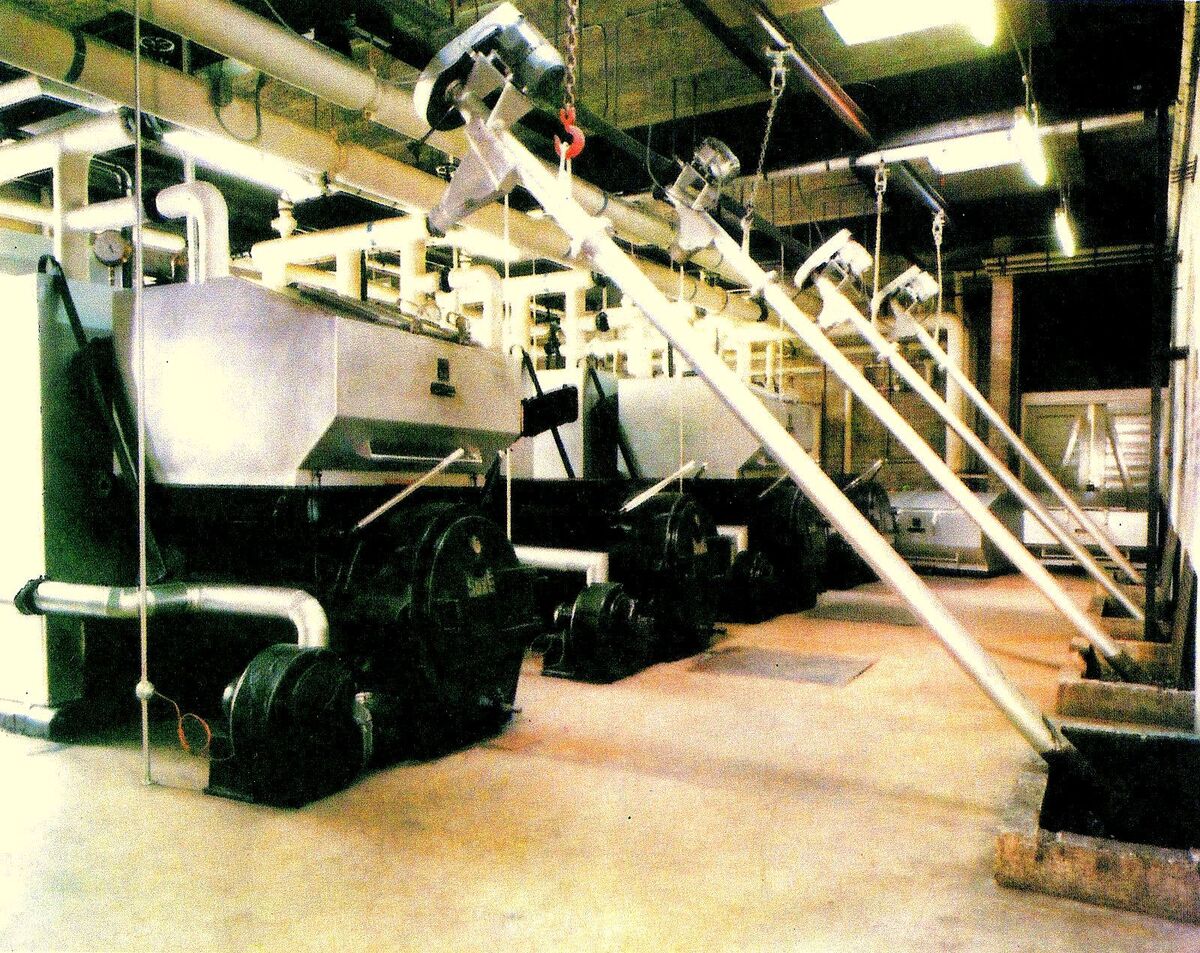
Suxé International, now DRAIG International, dominated the Anthracite and coal burning market in Europe from the 1950s through to the early 2000s. Originally a Swedish Company, Suxé was bought in the 1970’s by the Smith family and moved to South Wales in the UK. Suxé continued to provide heating and hot water plant predominantly in South Wales to hospitals and schools, where Anthracite was available in large quantities.

In the mid 1980’s, the government under Margaret Thatcher effectively closed down the UK coal industry.  With Europe turning to renewable fuel sources, Suxé was left without a market. Suxé spent the next 2 decades redeveloping and redesigning the Suxé technology to enable the burning of a wide range of fuels, other than coal and anthracite, such as petroleum cokes, lignite, wood, wood chips, briquetted sawdust, coconut shells, bagasse, bamboo and other biomass fuels.

In the early 2000’s Suxé technology was introduced to Africa where coal is still being used to generate power and there was also an abundance of renewable fuel available. In 2018 whilst negotiating with the government of Nigeria for the implementation of 200 x 50MWe community-based power stations, the owner of Suxé, Trevor Smith, became a victim of malaria. With the company being in his sole name, the decision was taken to form a new operation with the company name DRAIG International, DRAIG being the old name for a dragon, the national symbol for Wales, in tribute to the company’s origins in South Wales, UK.


During the last few years, the RPX burner series, a revolutionary multi-fuel combustion process, originally designed to burn coal and anthracite, has undergone radical redevelopment, allowing the burners to be part of many different power generation applications. The focus of this redevelopment of the Suxé combustion burner was to develop a revolutionary modern product that can produce electricity, whilst meeting all the requirements of producing clean energy with very low emissions. The first of the New Generation of multi-fuel power stations was erected in Lincoln in the UK and following a rigorous and lengthy testing process, this station is due to go live in 2026.

DRAIG International is head quartered in the Isle of Man, United Kingdom. DRAIG will be setting up country specific businesses for the manufacture and sale of the DRAIG RPX 2000 burners. Each local business will have its own local management team, culture and national identity


----END SECTION----.


Business Services

DRAIG provide two business services:


  • Retrofit DRAIG burners in existing power plants
  • Build new plants using DRAIG burners.   


DRAIG is committed to philanthropic work, so every area we operate in will be the recipient of our profits invested in projects and infrastructure that benefit the local community.

DETAIL

DRAIG can restore the legacy coal industry retrofitting our technology and marrying the polarizing concepts of inexpensive, domestically sourced baseload power generation with low noxious emissions meeting all known global emissions standards

The DRAIG business model is centred around retrofitting burners at zero cost to the plant owners.

While the plant will control the burner throughput, DRAIG will own, maintain and monitor burners and technical performance from a central operation. Burners will be upgraded with new developing technology on a timely basis. Without the need for a capital outlay, the plant owners will cover DRAIG’s services with a small percentage of their electricity sales (negotiated on a case-by-case basis).

DRAIG will build new plants using DRAIG burner technology, with the support of an international EPC (Engineering, Procurement Contractor) specialising in energy plant builds.


The cost of DRAIG’s standard plant is 3.7 million USD per MWe. Costs may vary based on geographical location, local labour and material costs, terrain, facilities and access to necessary resources for both building and running a proposed plant.

According to EFSC Investment Group (UK) and other sources, the cost of building an ultra-supercritical coal-fired power plant globally, now ranges from 3.6 to 8.4 million USD per MWe*.

The burner combustion efficiencies of our competitors’ plants are typically as low as circa 45%, whereas DRAIG’s burner combustion efficiency is circa 98-99%.


  *Sources:

EFSC Source Coal-fired power plant construction costs

World Nuclear Association:  Economics of Nuclear Power - World Nuclear Association

----END SECTION----


Commercial Packages

Retrofit Burners


The retrofit programme includes the following:


Plant New Build


DRAIG can support the building of new power plants using an international EPC for any of the following scenarios:


In all cases DRAIG own the burners and provide them on a rental model with no capital outlay for the client, with central monitoring for maximum efficiency and timely upgrade programmes as required.

----END SECTION----